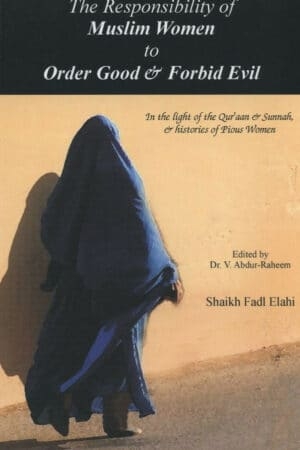





The Responsibility Of Muslim Women To Order Good & Forbid Evil
149 kr
| Författare: | Fadl Elahi, V. Abdur Rahim (1445H) |
|---|---|
| Utgivare: | Invitation to Islam |
| Språk | Engelska |
| Bindning: | Mjukpärm |
| Sidor: | 160 |
| Storlek: | 15×21 |
| Vikt | 1111 g |
Slutsåld. Leverans inom 10–30 dagar efter beställning in shaa Allah!
Allah has made enjoining good and forbidding evil an obligation upon this Ummah, and He has connected the fulfilment of this duty with goodness in both this world and the Hereafter. The Ummah will never attain superiority, strength, honour, and success unless its individual members—men and women alike—fulfil their responsibilities to the best of their abilities. Among the most important of these responsibilities is enjoining good and forbidding evil.
Despite the importance of this obligation, it is apparent that many people who recognise the responsibility of enjoining good and forbidding evil restrict it, either in their understanding or in their practice, to men rather than women. They assume that women have no responsibility to fulfil this religious duty.
Such an understanding leads to corruption and harm that cannot be hidden from those who possess insight and understanding. A man who is responsible for his household may leave for the masjid to worship his Lord, while his children, in the presence of their mother, witness or hear things that Allah has forbidden. The responsibility of enjoining good and forbidding evil, therefore, cannot simply be regarded as the responsibility of men alone.
It is for this reason, and out of a desire to remind and enlighten my brothers and sisters regarding the responsibility of women to enjoin good and forbid evil, that I have undertaken to address this subject.
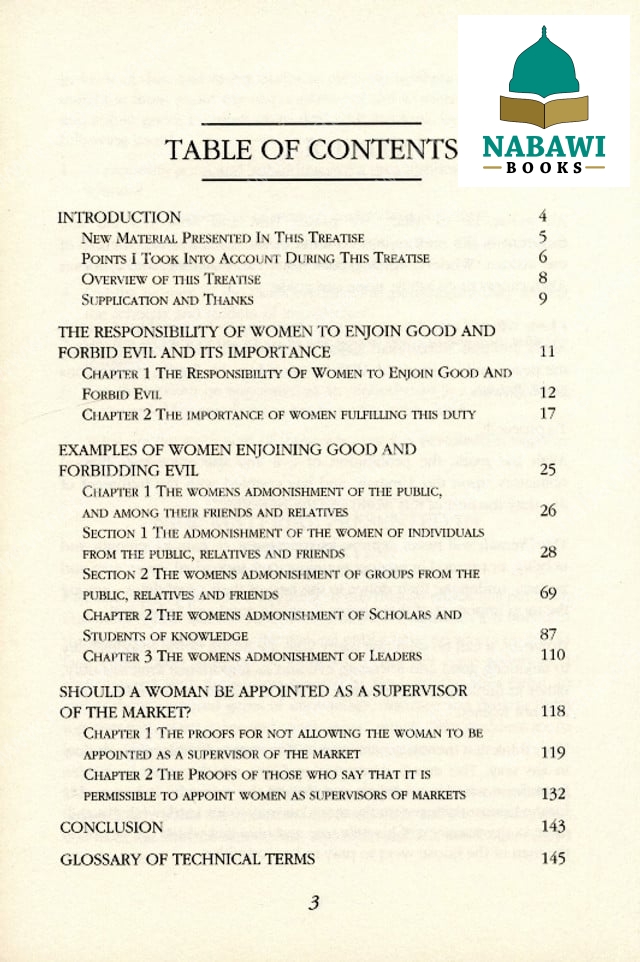
This discussion will examine the following questions:
Is enjoining good and forbidding evil an obligation upon women?
What is the importance of women fulfilling this obligation?
Did the women among the Pious Predecessors fulfil this duty among the general public, as well as among their friends and relatives?
Did the women among the Pious Predecessors fulfil this duty with scholars and students of knowledge?
Did the women among the Pious Predecessors fulfil this duty with rulers and leaders?
Can a woman be appointed as an ombudsman or market inspector to oversee the prohibition of evil and the enjoining of good? What evidence is there for prohibiting women from fulfilling this role?
What are the evidences presented by those who consider it permissible for women to fulfil this role, and how should those evidences be understood and evaluated?