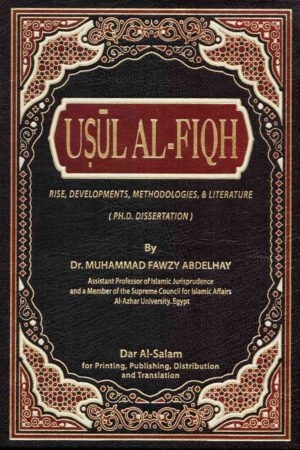






Usul al-Fiqh: Rise, Developments, Methodologies & Literature
400 kr
| Författare: | Muhammad Fawzy Abdelhay |
|---|---|
| Utgivare: | Darussalam |
| Språk | Engelska |
| Bindning: | Hårdpärm |
| Sidor: | 632 |
| Vikt | 940 g |
Endast 2 kvar i lager (kan restnoteras)
Usul al-Fiqh is an English work on the principles of Islamic jurisprudence compiled by Dr. Muhammad Fawzy Abdelhay of Al-Azhar University, Egypt.
The book examines the rise, development, methodologies, and literature of Usul al-Fiqh from its earliest foundations to the modern era. It offers readers, teachers, and researchers a structured and in-depth study of the origins of Usul, its historical phases, and its intellectual evolution.
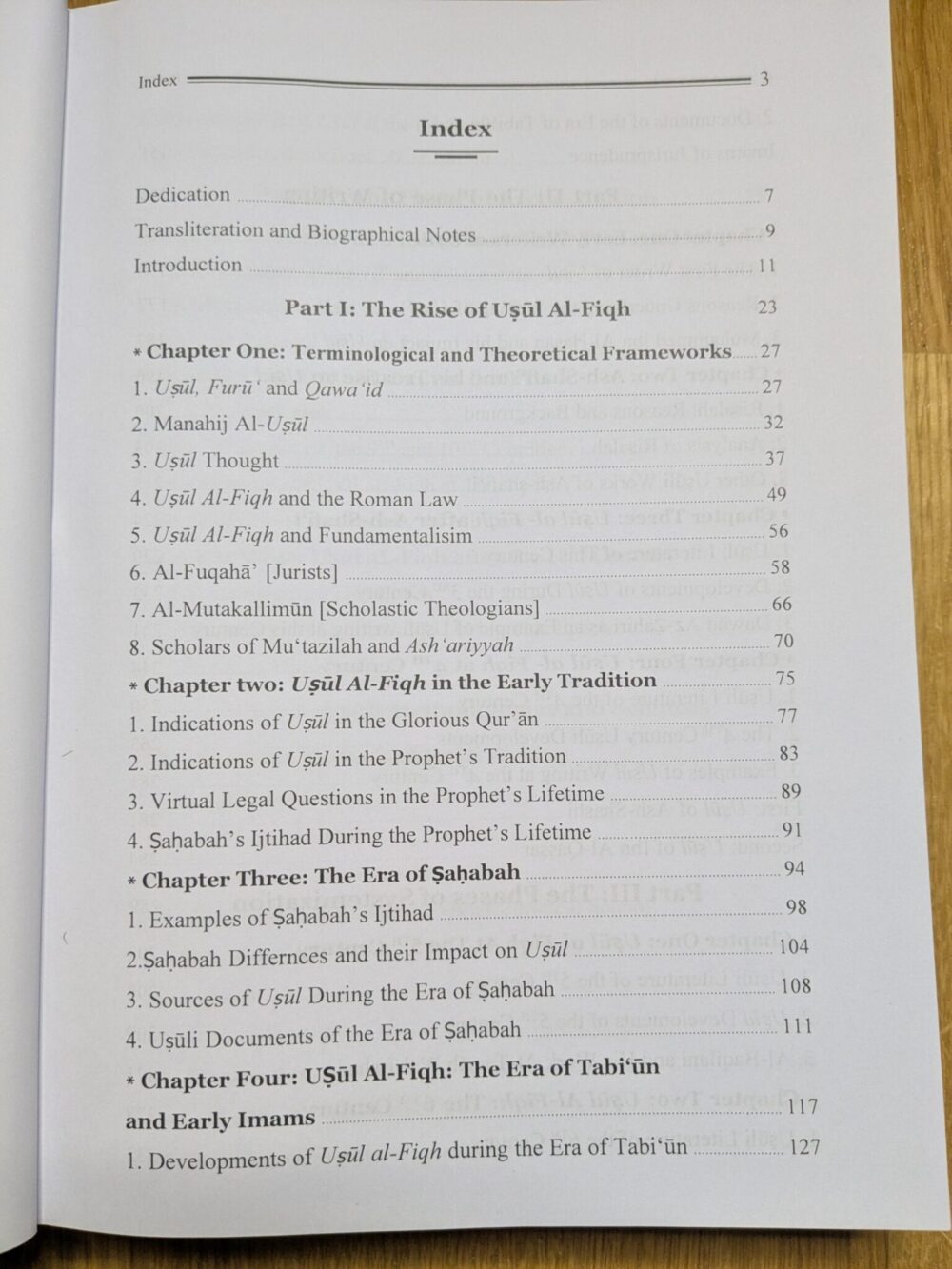
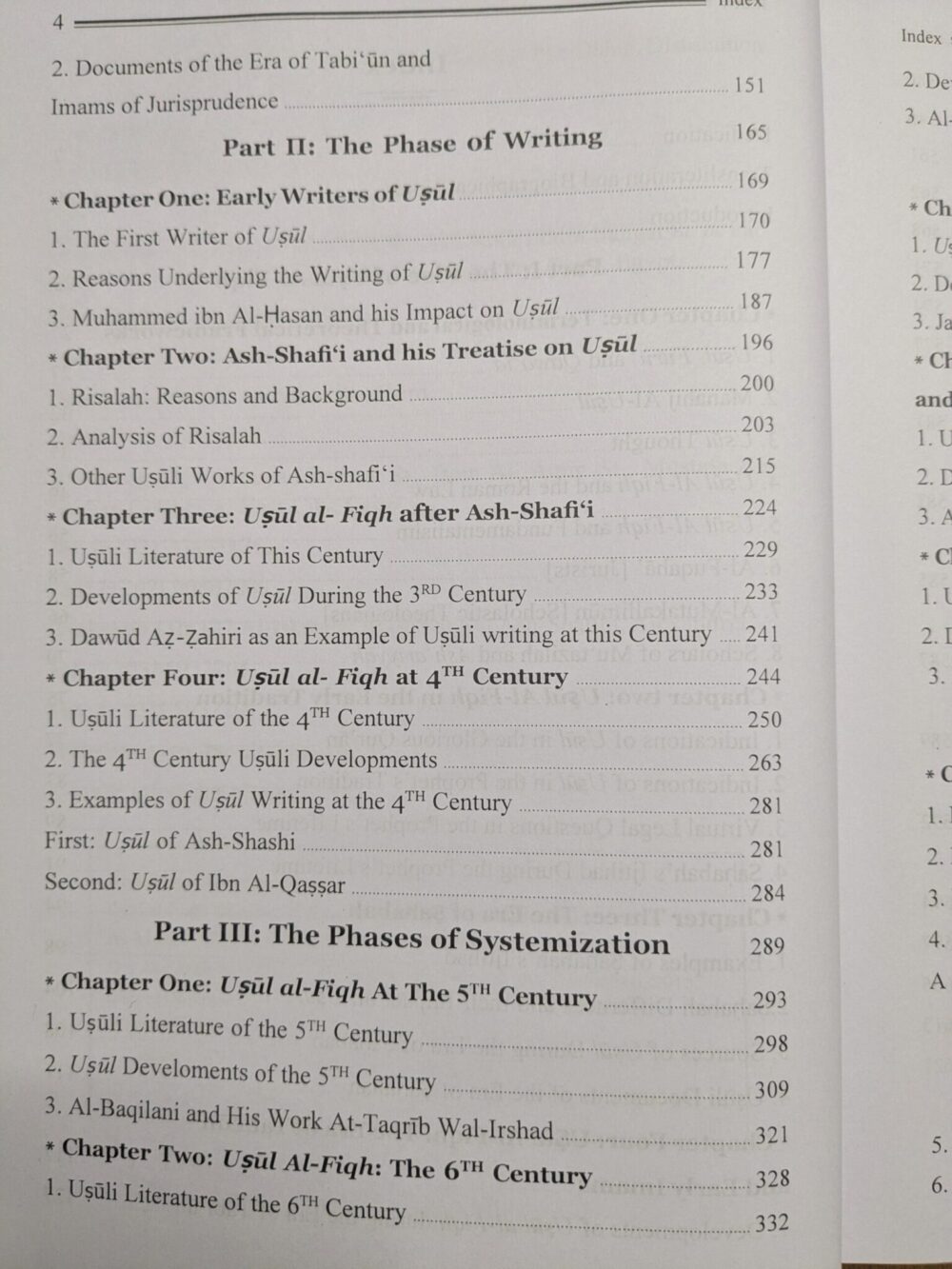
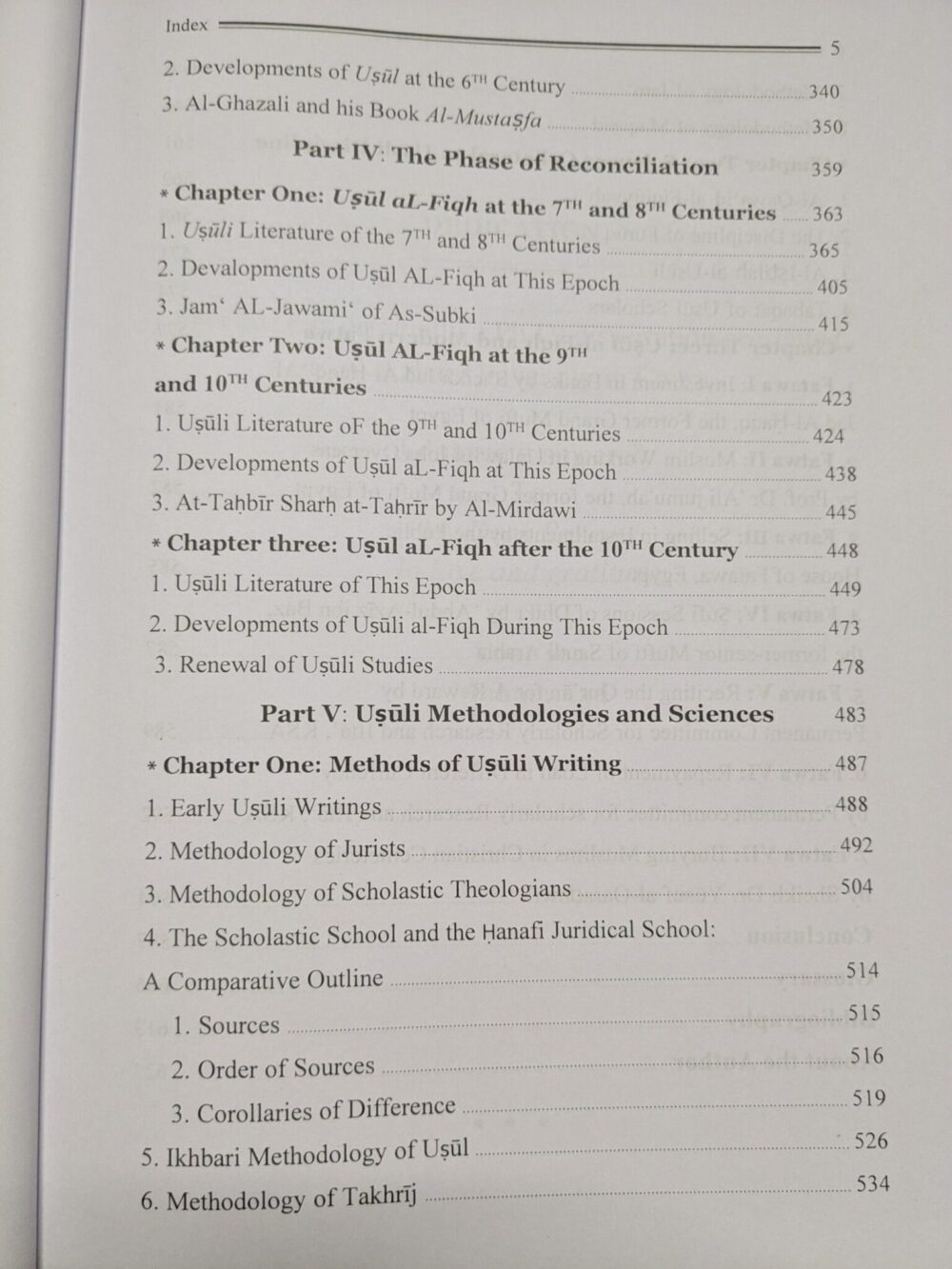
Outline
The work consists of an Introduction and five main parts.
The Introduction highlights the emergence of jurisprudence, its key figures and centers, and the significance of studying Usul al-Fiqh.
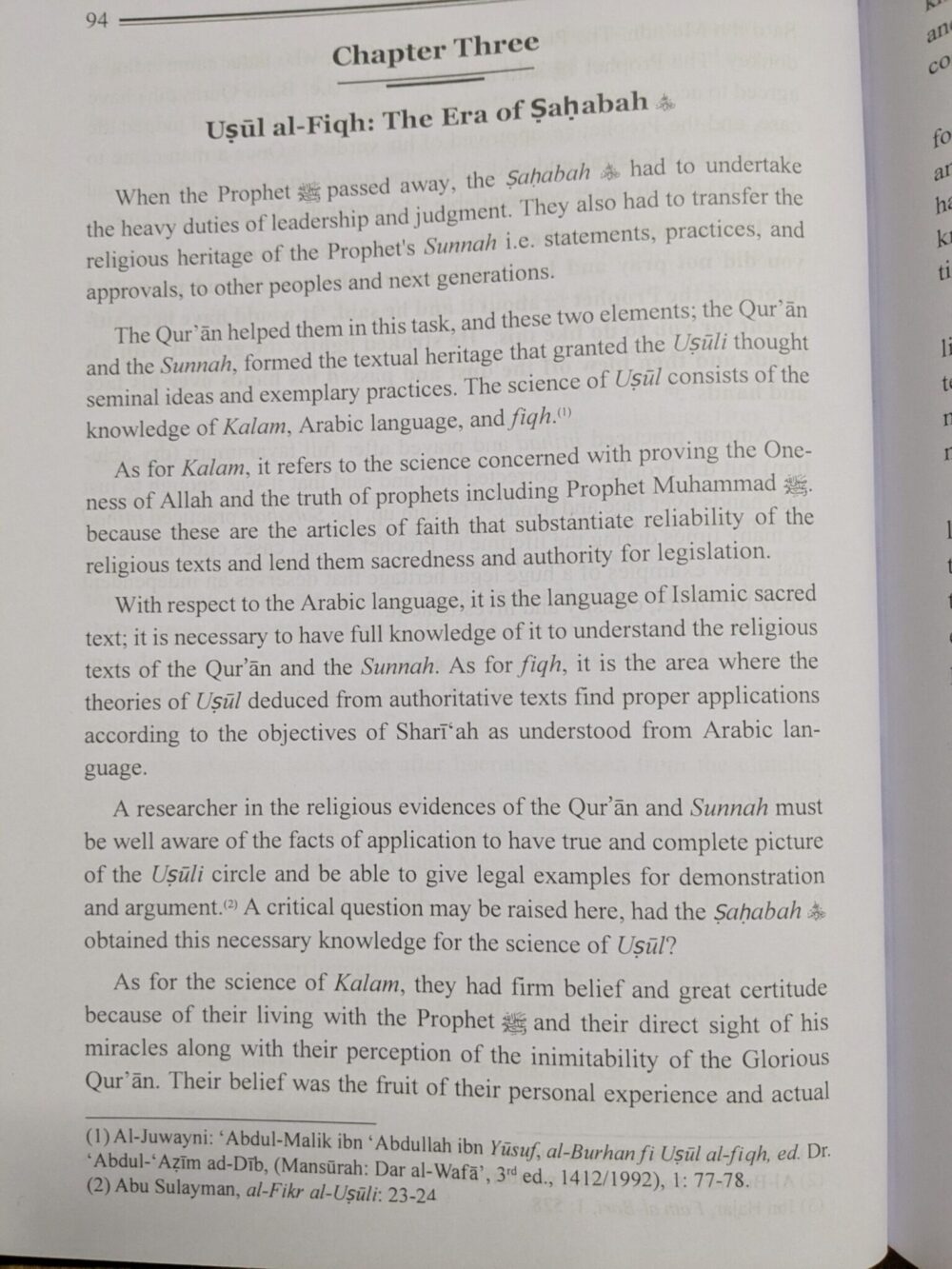
Part One explores foundational terminology and the early roots of the discipline in the Qur’an, the Sunnah, and the practice of the Sahabah. It examines early juristic trends, the relationship between Usul and other intellectual movements, and the formative contributions of early scholars.
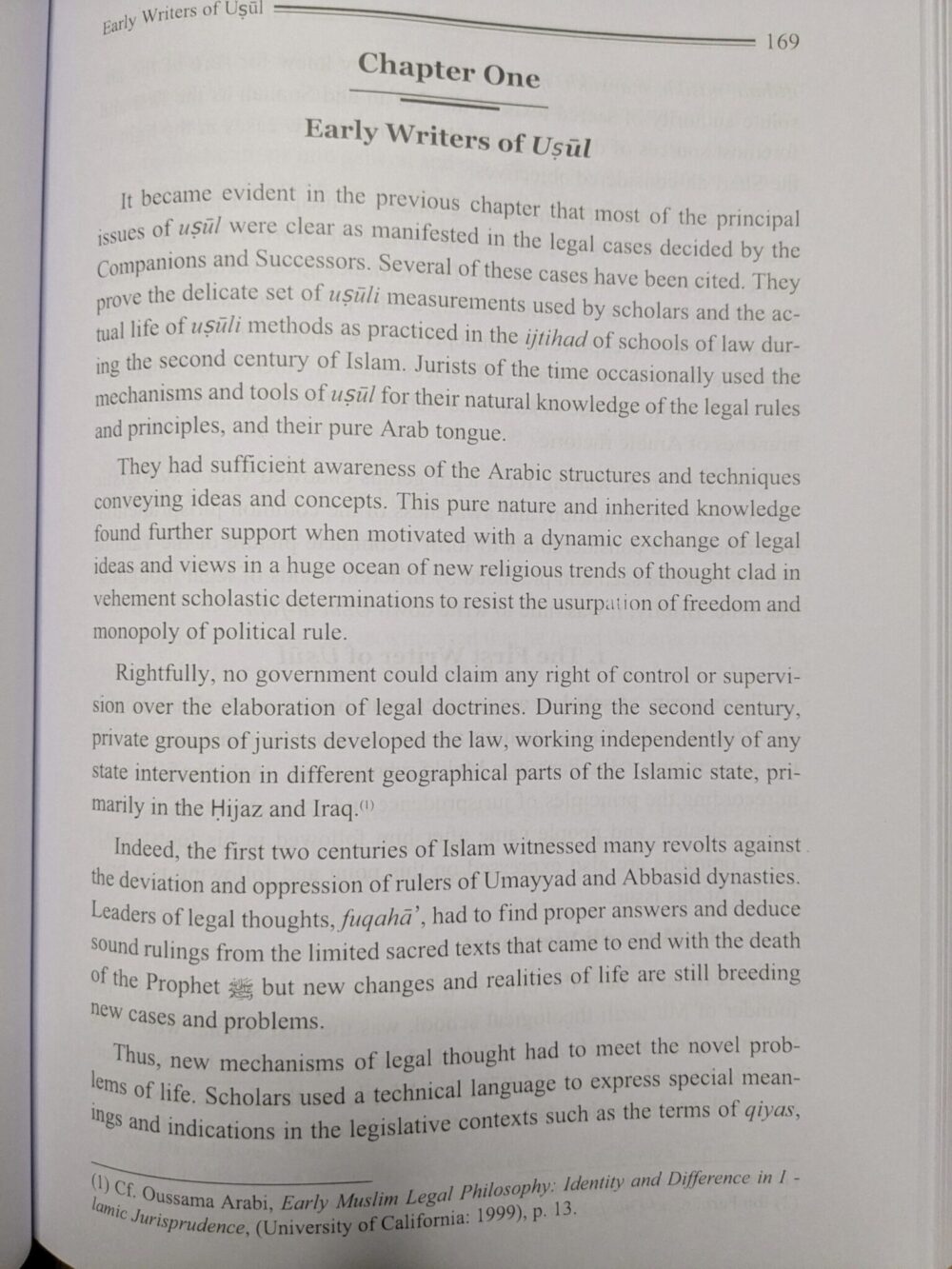
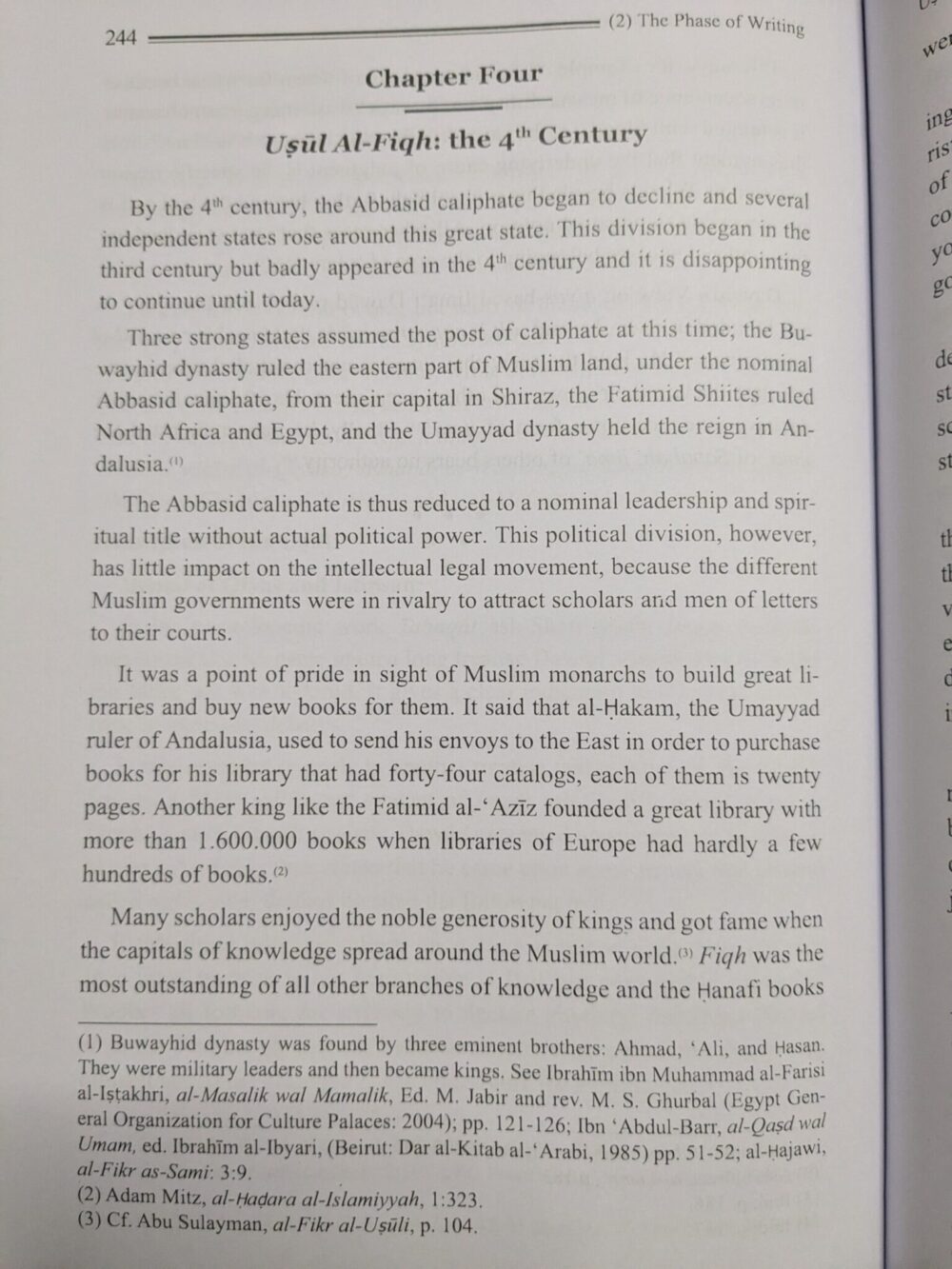
Part Two discusses the formal establishment of Usul al-Fiqh, focusing on early authors, the pivotal role of Imam al-Shafi‘i and his ar-Risalah, and the literary developments of the third and fourth centuries across different legal schools.
Part Three covers the period of systematic refinement and consolidation, including the major contributions of Imam al-Ghazali and an analysis of his seminal work al-Mustasfa.
Part Four addresses the interpretative phase, characterized by commentaries and encyclopedic works, highlighting figures such as Imam al-Subki and later cross-madhhab scholarship, as well as reformist efforts to revive and expand Usuli studies.
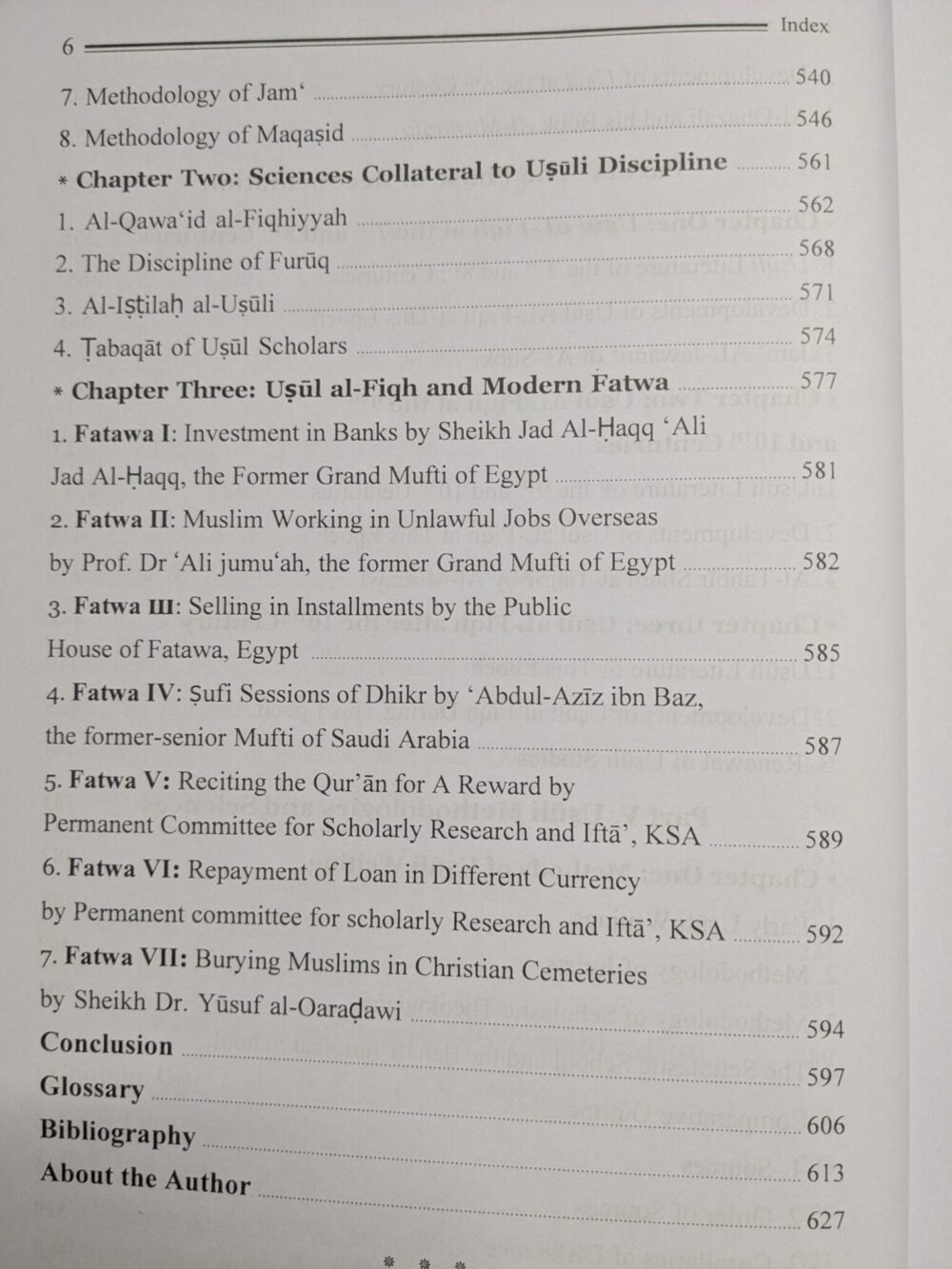
Part Five examines the various methodologies of Usul al-Fiqh, including juristic, scholastic, Ikhbari, takhrij, Jam‘, and Maqasid approaches. It also discusses related sciences such as legal maxims (Qawa‘id al-Fiqh), and concludes with an analysis of modern fatwas and the continuing impact of Usuli methodology on contemporary legal reasoning.
The book ends with conclusions and recommendations for future research in the field of Usul al-Fiqh.
Relaterade produkter